What Is PoE?
PoE carries both data and DC power over Ethernet cable. IEEE 802.3af/at/bt classes, PSE/PD roles, and power budget notes for voice and camera projects.
PoE (Power over Ethernet) is IEEE 802.3 family technology that carries data and DC power on standard Ethernet cable. The goal is powering endpoints such as IP phones, access points, cameras, or intercoms without a separate outlet and reducing cabling cost. PoE is not «unlimited watts»—switch/injector budget, cable category, and distance (typically 100 m) must be calculated in design.
How PoE works: standards, PSE and PD
The power source is PSE (Power Sourcing Equipment: PoE switch or injector); the powered device is PD. On connect, a low-voltage negotiation (classification) runs first; IEEE-compliant PSE does not send power to non-PoE devices. That handshake greatly reduces «burning» risk on non-PoE gear—still avoid cheap non-standard injectors.
802.3af, 802.3at, and 802.3bt
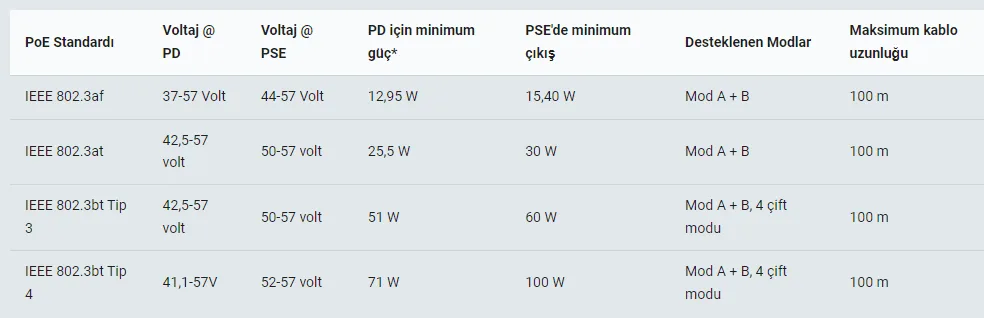
- 802.3af (PoE): PSE ≈ 15.4 W; PD typically ~12.95 W
- 802.3at (PoE+): PSE ≈ 30 W; PD ≈ 25.5 W
- 802.3bt (PoE++): Type 3 ≈ 60 W / Type 4 ≈ 100 W class (lower cable loss at PD)
High-power PTZ cameras, Wi‑Fi 6/7 APs, or thin clients often need bt class and Cat6/Cat6a planning. Cat5e suffices for many af/at cases; 10G plus high power makes cable and patch quality critical.
Mode A / Mode B and power budget
PoE pin modes differ (Mod A endspan vs Mod B midspan); modern switches work with most PDs but legacy midspan plus special pin maps can fail. When choosing a switch, calculate total PoE budget (e.g. 370 W chassis), not per-port max alone. Assuming every port at «max class» overshoots budget; sum IP phone count on the voice VLAN with camera/AP load.
Enterprise use and limits
Typical PDs: IP phone, Wi‑Fi AP, IP camera, intercom, card reader. Benefits: single cable, centralized UPS backup, flexible placement. Limits: ~100 m reach, splitters/injectors for legacy non-PoE gear, heat and patch loss at high power. Connecting non-PoE gear to IEEE PSE is usually safe (no power applied); passive PoE adapters outside the lab carry separate risk.
Voice and camera project checklist
- PD class × count ≤ switch PoE budget (leave margin)
- Voice VLAN + data VLAN; managed PoE switch and port shutdown policy where possible
- Cable: Cat5e minimum; prefer Cat6a for high power / 2.5G+
- UPS runtime: plan PBX + PoE switch together
Summary: PoE merges power and data on Ethernet; without correct IEEE class, PSE budget, and cable plan, «plug and play» expectations fail. This is not vendor brochure copy; use manufacturer watt tables and field measurement in deployment.
Related Posts

What Is TR-069?
TR-069 is the CWMP standard ISPs use to remotely configure, monitor, and update customer premises equipment (CPE) via an ACS....

What Are Paging, Announcement, and Central Music Broadcast Systems?
Paging and announcement systems deliver voice messages to zones. Central music broadcast uses the same infrastructure for atmosphere....

What Is ATEX and What Are ATEX Safety Classes?
ATEX refers to the European Union safety framework for equipment and workplaces used in explosive atmospheres....